An end-to-end pipeline for endangered archives
Archival Intelligence is building an open AI pipeline that connects the recovery of fragile sources with recognition, description, search, analysis, and responsible access. Its initial research focuses on the multilingual and multimodal cultural record of New Orleans.
Last updated:
Connecting the full archival process
Archival technologies often address digitization, transcription, cataloging, and search as separate tasks. Archival Intelligence investigates how they can operate as a connected process across different media, languages, and states of preservation.
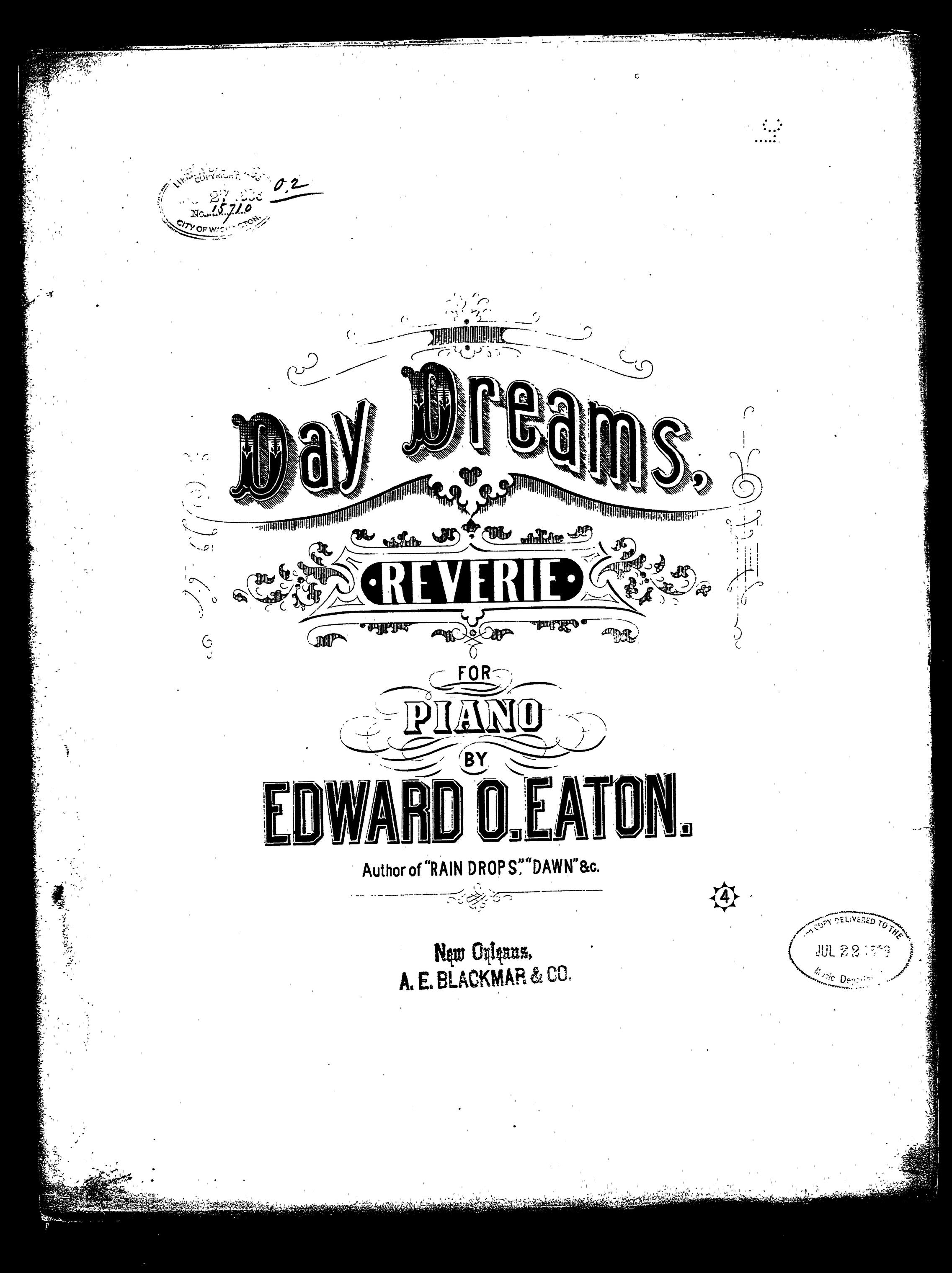
Newspapers, sheet music, correspondence, photographs, and recordings carry different forms of damage and different kinds of evidence. The project evaluates and improves existing models while keeping their outputs connected to provenance, language, rights, historical context, and human interpretation.
From source material to responsible access
The stages below describe the research problem at a functional level. They do not assume that every source follows an identical path: the requirements of a newspaper, manuscript, photograph, musical score, or recording differ.
Capture
documents · images · audio
Recover
legibility · layout · signal quality
Recognize
print · handwriting · speech · music
Describe
metadata · provenance · language · rights
Connect
people · places · works · collections
Search & Analyze
content-level discovery · cultural research
Review & Access
human judgment · permissions · appropriate use
Evaluating existing models
The project examines where current systems succeed, where their performance deteriorates, and what kinds of improvement are required for archival use. Evaluation includes materials whose physical condition, layout, medium, or language falls outside the assumptions of conventional digitization.
Louisiana French across the pipeline
Language affects every stage of archival processing, from recognition and description to search and interpretation. Louisiana French materials may contain regional vocabulary, historical spelling, variation among speakers and communities, and code-switching across written and recorded sources.
In collaboration with Nous Foundation in New Orleans, Archival Intelligence is beginning research into how existing models perform on these materials and how that performance might be improved. Linguistic, historical, and community expertise is necessary to distinguish model error from meaningful variation.
Louisiana French therefore serves as an early test of the pipeline as a whole. Linguistic features affect recognition, archival description, connections among materials, search results, interpretation, attribution, and access.
Recognition, context, and research use
Model output
recovered image
recognized text or speech
proposed description or relationship
Archival evidence
date · creator · place · language · collection · provenance · rights · historical context · relationships · uncertainty
Access is a research question
Improved recognition and search can make archival materials substantially more accessible, but access is neither uniform nor automatic. Ownership, attribution, cultural sensitivity, and intended use differ across collections. The pipeline therefore carries provenance, permissions, community knowledge, and human review alongside computational outputs. Archival Intelligence is a signatory to the Open Heritage Statement.
Archival Intelligence is an independent research initiative supported by Schmidt Sciences’ Humanities and AI Virtual Institute, with research conducted in collaboration with Kenyon College, Berklee College of Music, Louisiana State University, and other partners.
This approach grows out of broader work at the Human-Centered AI Lab on how AI systems interact with language, culture, judgment, and human values.